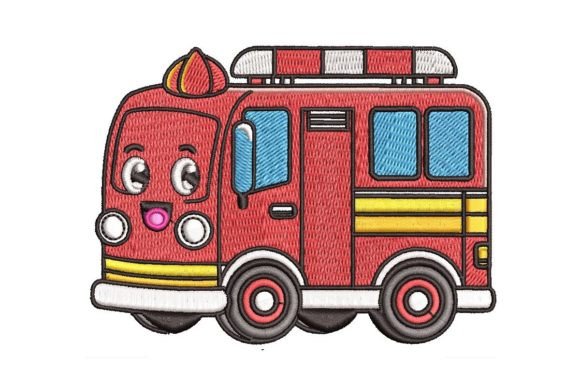
Fire Truck Embroidery Design Review
As an embroidery designer who has spent years translating graphics into thread, I look at every new file with a critical eye. We aren’t just making pretty pictures; we are creating assets for small businesses, branded merchandise, and customer experiences. When evaluating a machine embroidery design, the question is never just "does it look good?" but rather "will this hold up on a cap, sell on Etsy, or represent my brand professionally?" Today, I am reviewing the Fire Truck Embroidery Design. Tailored for a 4×4 hoop size, this file offers specific opportunities and challenges for apparel decorators, handmade brands, and merch creators.
First Impressions and Visual Personality
The title suggests a bold, energetic subject matter. In the world of embroidery, fire trucks are inherently iconic. They convey urgency, bravery, and community service. For a small business—whether it’s a local bakery, a children’s boutique, or a creative studio—using this imagery can instantly communicate a sense of fun and reliability. The description notes that it is perfect for embellishing sweatshirts, t-shirts, aprons, and hankies. This versatility is a strong indicator of its potential value as a brand identity tool.
Visually, I expect this design to lean towards a playful yet structured aesthetic. Fire trucks have distinct lines: the ladder, the wheels, the cab. If executed well in thread, these elements create a crisp, recognizable silhouette. It feels professional enough for staff uniforms but friendly enough for children’s wear. It strikes a balance between rustic charm and modern clarity, making it suitable for a wide range of custom apparel projects.
Real-World Business Applications
Let’s move beyond the screen and look at how this embroidery file performs in real production scenarios. Here is where I see the most value for small business owners and product designers:
- Embroidered Patches: This is perhaps the strongest use case. A fire truck motif works exceptionally well as a chest logo accent or a sleeve detail on denim jackets and work shirts. Because it is tailored for a 4×4 hoop, it fits perfectly within standard patch dimensions. These can be used as branded product add-ons or sold individually to crafters.
- Staff Uniforms and Aprons: For a café, bakery, or florist, adding a subtle fire truck element can inject personality into apron embroidery. It breaks the monotony of plain black or white uniforms without being overly distracting. It signals a welcoming, community-focused atmosphere.
- Caps and Hats: Cap embroidery requires precision. A 4×4 design can often be adapted for cap fronts, provided the curvature is managed correctly. This design could serve as a unique mark for event merch or a distinctive logo for a local youth organization.
- Tote Bags and Product Packaging: For Etsy sellers and craft business assets, a fire truck stamp adds perceived value. Placing this on canvas tote bags creates a cohesive look for gift sets. It transforms a simple bag into a handmade product with character.
- Customer Gifts and Event Merch: Local events, fire station fundraisers, or back-to-school promotions benefit from thematic designs. This file allows businesses to quickly produce relevant commercial embroidery items that resonate emotionally with customers.
Strategic Placement and Brand Identity
How you place this design affects customer trust and recognition. A well-executed embroidered patch looks premium. It suggests attention to detail. When a customer sees a high-quality stitch job on a hoodie or a tote, they associate that quality with the brand itself.
Consider using the Fire Truck Embroidery Design as part of a larger visual system. If your brand uses primary colors (red, blue, yellow), this design will reinforce that palette. However, if your brand is minimalist or monochromatic, you must choose your thread colors carefully. Using a tonal red-on-red or dark navy-on-black can create a sophisticated, understated version of the fire truck theme. This approach elevates the finished product from novelty item to fashion statement.
Furthermore, consistency is key. If you use this design on hats, you should consider using it on matching tote bags or aprons. This creates a unified brand identity that makes your shop memorable. Buyers engage more deeply when they recognize a consistent visual language across different products.
Where to Use with Caution
Not every surface is created equal. As a designer, I advise caution in the following areas:
- Small Patch Sizes: If you plan to reduce this design significantly for tiny labels or pin-back buttons, you may lose detail. Fine outlines might merge together, creating a muddy appearance.
- Curved Surfaces: While caps are common, complex curves can distort the geometry of the truck. Always test on the actual garment shape before bulk production.
- Textured Fabric: Rough fabrics like heavy tweed or boucle can obscure fine stitching. Smooth cottons, poly-cotton blends, and canvas are ideal for maintaining sharp edges.
- Dark Uniforms: Ensure high contrast. A light-colored truck on a dark shirt works best. Low contrast threads can get lost in the fabric texture.
- Frequent Washing: For items like aprons or work shirts that undergo industrial laundering, ensure the design uses stable stitches and proper backing to prevent puckering or thread breakage.
Practical Designer Notes for Production
Before you hit the start button on your machine, follow these essential steps to ensure a professional result:
- Test in Black and White: Convert the design to grayscale first. This helps you evaluate the balance of negative space and positive stitch areas. If it doesn’t read clearly in monochrome, it won’t work in color.
- Check Stitch Density: High stitch density can make fabric stiff and bulky, especially on lightweight tees. Verify that the underlay stitches are sufficient to stabilize the fabric without causing distortion.
- Review Thread Color Contrast: Choose threads that pop against your chosen fabric. Red on white is classic, but red on black requires a bright, vibrant red thread to stand out.
- Inspect Spacing: Look closely at the gaps between the ladder rungs, wheels, and windows. Are they too narrow? Will the needle hit the edge of the design?
- Confirm Hoop Size: The description specifies a 4×4 hoop. Ensure your machine setup matches this. If you need a larger design, you will need to digitize it further or combine files.
- Test on Real Fabric: Never skip the sample run. Test on the exact fabric you intend to sell. Different materials react differently to tension and stabilizers.
- Use Proper Stabilizer: For stretchy knits like sweatshirts, use cut-away stabilizer. For woven fabrics like tote bags, tear-away may suffice. Wrong stabilizer choice leads to puckering.
- Create a Printable Mockup: Before producing inventory, create a digital mockup. Show this to clients or use it for marketing. It helps visualize the final printable mockup and aids in sales.
- Compare Beside Other Assets: See how this design sits next to your other logos or text. Does it clash? Does it complement? Visual harmony is crucial for design assets.
- Confirm Commercial Licensing: Most importantly, verify the license terms. Can you sell unlimited quantities? Is attribution required? Protect your business by understanding the legal scope of the digital embroidery file.
Final Verdict
The Fire Truck Embroidery Design is a versatile, engaging asset for small business merch and branded patches. Its suitability for a 4×4 hoop makes it accessible for home embroiderers and small shops alike. By focusing on proper placement, fabric selection, and quality control, you can transform this simple file into a powerful tool for building brand identity and driving sales. Whether you are decorating custom apparel, creating unique tote bag designs, or adding flair to apron embroidery, this design offers a solid foundation for creative commercial projects. Just remember to test thoroughly and respect the technical limits of the medium. With care, this design can become a standout feature in your product line, delighting customers and enhancing the perceived value of your handmade goods.